Description
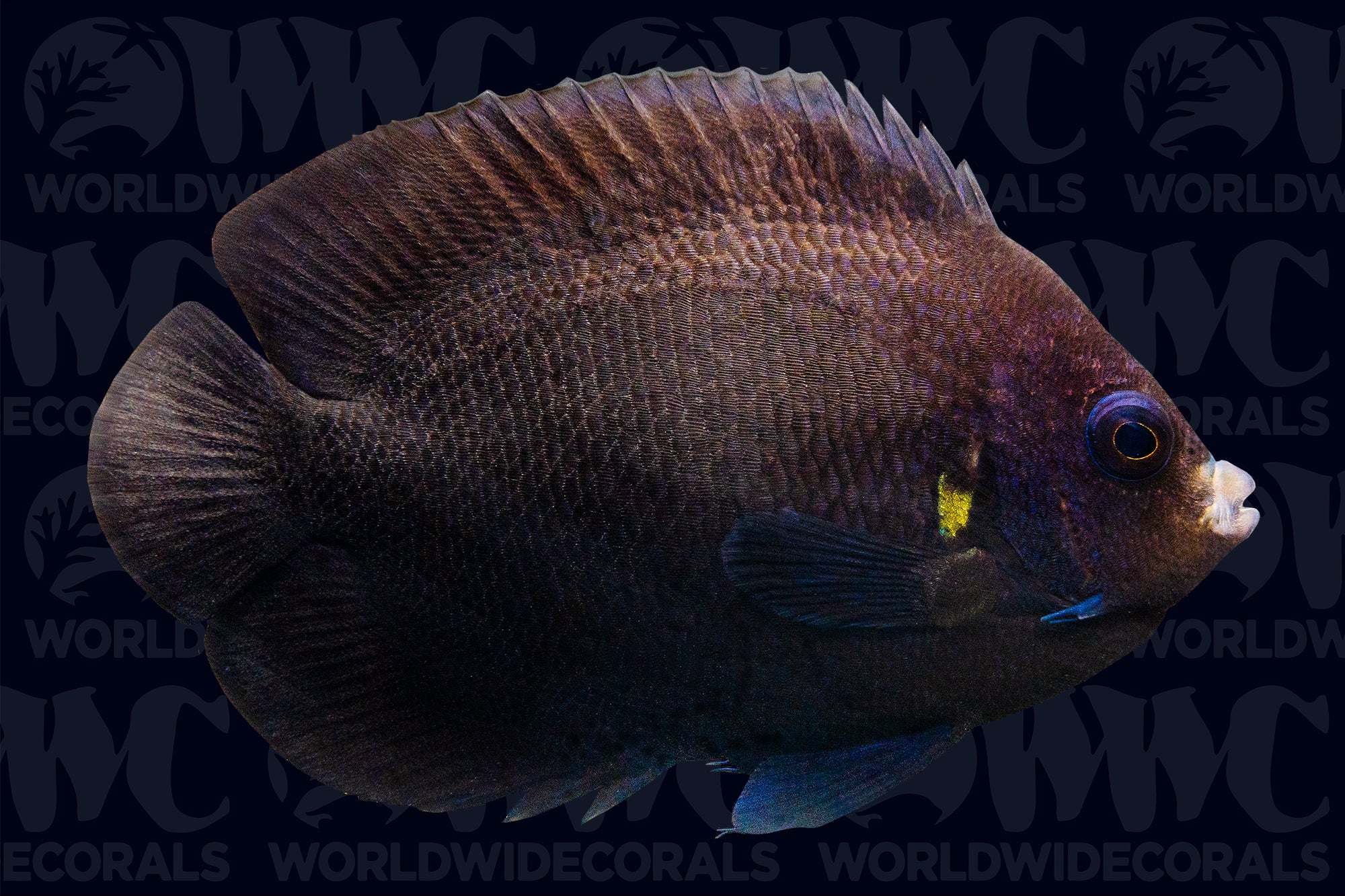
Centropyge nox
Centropyge angels are favorites with hobbyists due to their small adult size, unique coloration, and generally hardy nature. The Black Nox Dwarf Angelfish is a striking dwarf angelfish known for its deep charcoal to jet-black coloration, which gives it a sleek and dramatic appearance in the aquarium. Unlike many brightly colored dwarf angels, its dark tones make it a standout species. As with other dwarf angelfish, Centropyge nox can be territorial and may show aggression toward other angelfish or similarly shaped fish, particularly in smaller aquariums. The Black Nox Dwarf Angelfish is typically a reliable feeder once established and will accept a variety of prepared foods. A varied diet offered at least twice daily is recommended. In the wild, this species feeds on filamentous algae, sponges, tunicates, and other benthic organisms, so foods containing marine algae and sponge matter are beneficial. Their natural grazing behavior may include occasional coral nipping, meaning Centropyge nox is considered reef safe with caution. Centropyge nox grows to approximately 4 inches in length and is well suited for aquariums of 50 gallons or larger with plenty of live rock for grazing and shelter. This species is found in the Western Pacific, inhabiting coral-rich reef slopes and rocky reef areas, typically at depths ranging from shallow waters down to about 60 meters.

3 DAY GUARANTEE | Hassle Free | 100% Satisfaction | Online Orders Only