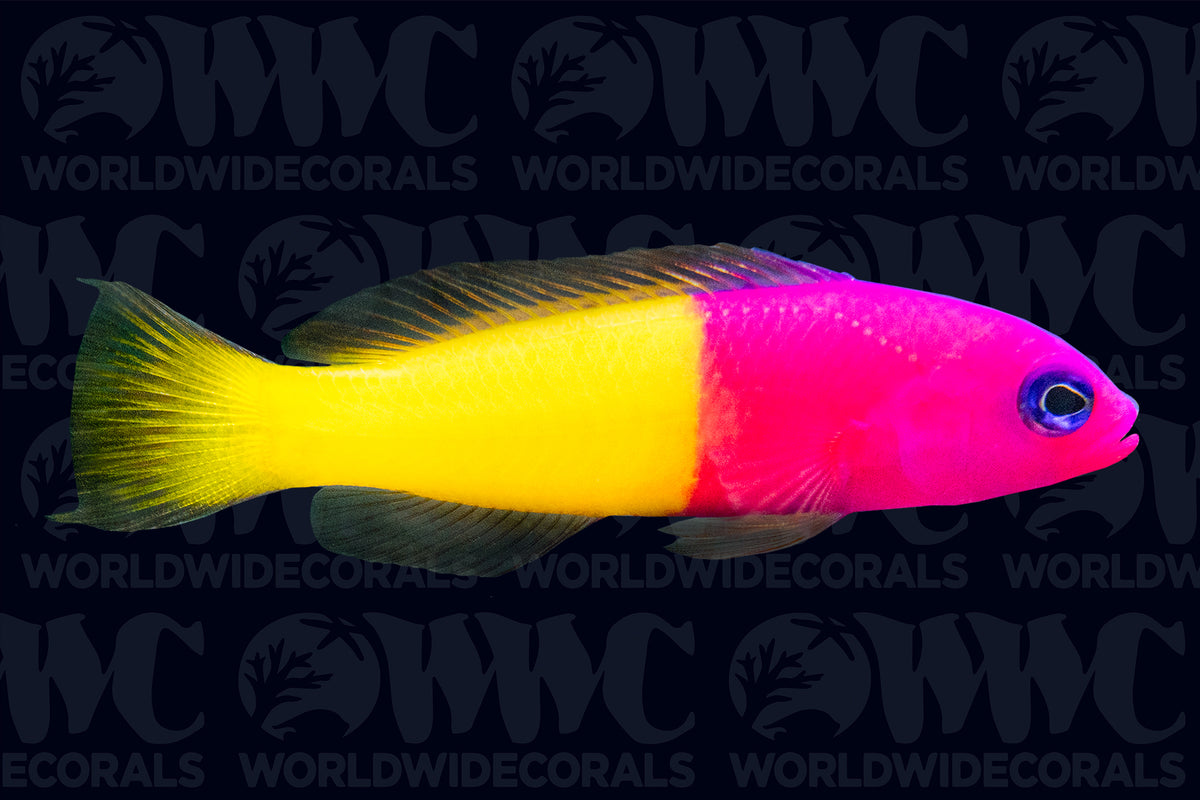
Pictichromis paccagnellae
The Bicolor Dottyback is a bold and intensely colored reef fish prized for its dramatic appearance, hardy nature, and strong personality. Adults display a vivid bicolor pattern consisting of a deep purple anterior half sharply contrasted with a bright yellow posterior half, making it one of the most visually striking marine aquarium fish available. Despite their small size, these fish are extremely confident and active, often seen patrolling rockwork and aggressively defending their chosen territory. An aquarium with abundant live rock, caves, and clearly defined hiding spaces is essential, as Bicolor Dottybacks naturally establish and defend small territories within reef structures. This species typically reaches about 3 inches (7.5 cm) in length and is best maintained in aquariums of 20 gallons or larger. Bicolor Dottybacks are generally semi-aggressive and may show significant territorial behavior toward similarly sized or slow-moving tankmates, especially in smaller systems. A secure, tight-fitting lid is recommended, as they may occasionally jump when startled or during confrontations. In the wild, Pictichromis paccagnellae inhabits coral reefs, rubble zones, and lagoon environments throughout the western Pacific, including Indonesia, the Philippines, and surrounding island regions. They are commonly found darting in and out of reef crevices where they hunt small crustaceans and other benthic invertebrates. Carnivorous by nature, this species thrives on a varied diet consisting of mysis shrimp, enriched brine shrimp, finely chopped seafood, and other high-quality frozen or prepared marine foods. Regular feedings help maintain vibrant coloration, strong health, and natural territorial behavior. Generally considered reef-safe, the Bicolor Dottyback typically does not harm corals or sessile invertebrates, though it may be aggressive toward smaller or passive tankmates. Its striking coloration, resilience, and bold personality make it a standout addition to appropriately planned reef aquariums.